
02 Oct 2026
How to Define a Target Audience for Your Business
A clearly defined audience helps businesses create relevant messages, choose suitable channels and avoid wasting their marketing budget.
The Digital Gardener
4 min read
5 views
Share this article
Trying to communicate with everyone usually results in marketing that connects with no one. When a business understands who it wants to reach, it can create clearer messages, choose suitable channels and invest its budget more effectively.
To define a target audience, a company must look beyond basic information such as age or location. It should also understand what potential customers need, how they make decisions and why they might choose one business over another.
What Is a Target Audience?
A target audience is a specific group of people most likely to be interested in a company’s products or services.
A target audience for business can be identified through characteristics such as:
Age and location
Profession or industry
Income or spending capacity
Interests and priorities
Problems or needs
Buying behaviour
Preferred communication channels
The objective is not to exclude potential customers. It is to concentrate marketing efforts on the people most likely to respond.
Start With Your Existing Customers
Businesses with an existing customer base already have valuable information available.
Begin by reviewing:
Which customers purchase most frequently?
Which services or products do they choose?
What problem were they trying to solve?
How did they discover the business?
What questions did they ask before purchasing?
Why did they choose your company?
This initial audience research can reveal patterns that are more useful than assumptions or generic market statistics.
Analytics from websites, social media, advertising platforms and customer-management systems can provide additional information about behaviour and acquisition channels.
Identify the Problem You Solve
A strong target audience is connected to a specific problem.
Instead of defining the audience as “people interested in restaurants”, a marketing agency might focus on “independent restaurant owners who need consistent social media content but do not have an internal marketing team”.
The second description identifies:
The type of business
The decision-maker
The business problem
The service required
The more clearly the problem is defined, the easier it becomes to create relevant marketing messages.
Create an Ideal Customer Profile
An ideal customer profile describes the type of person or company that receives the greatest value from your offer.
For a consumer-focused business, the profile might include lifestyle, needs, purchasing habits and motivations.
For a business-to-business company, it may include:
Industry
Company size
Location
Monthly budget
Decision-maker
Current challenges
Required services
The profile should be based on real information whenever possible. An invented persona filled with unnecessary details will not improve the marketing strategy.
Divide the Audience Into Segments
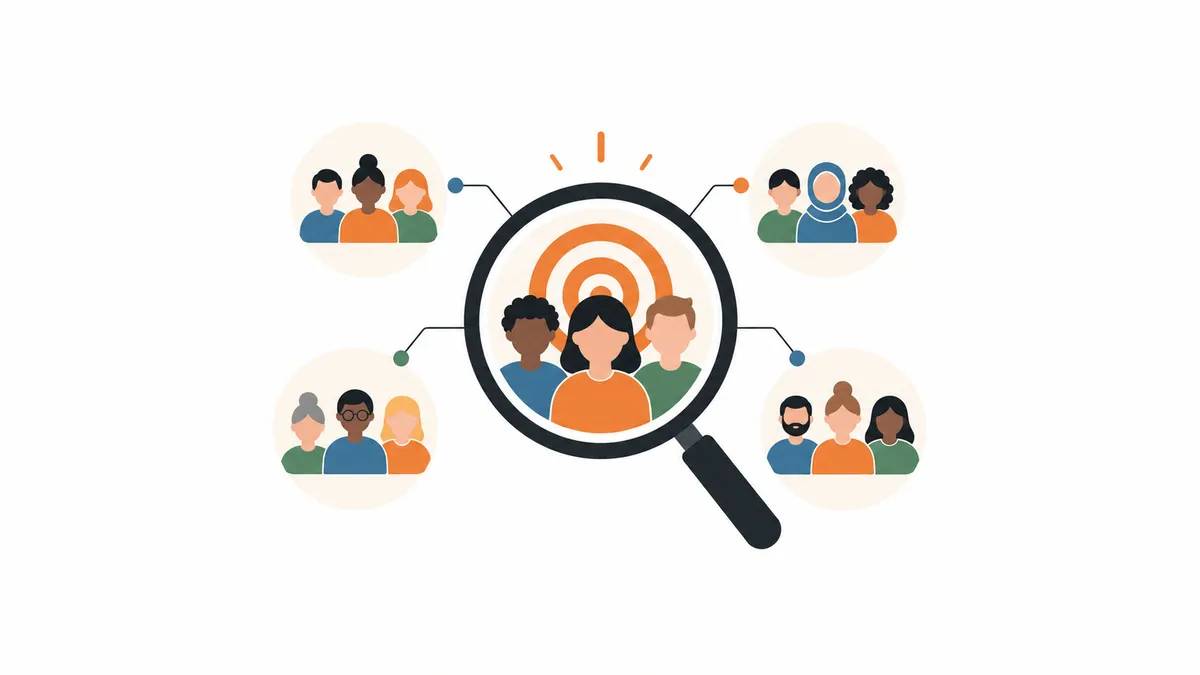
Not every customer has the same motivation. Customer segmentation divides the larger audience into smaller groups with similar needs or behaviours.
A hotel, for example, might target:
Couples planning weekend trips
Families searching for larger rooms
Business travellers requiring convenient services
International visitors interested in local experiences
Each group may respond to different images, offers and communication channels.
Segmentation helps the business adapt its message without changing its overall positioning.
Choose the Right Marketing Channels
Once the audience is clear, the business can identify where those customers spend their time.
A younger consumer audience may be easier to reach through TikTok or Instagram. Business decision-makers may respond better to Google Search, LinkedIn or email. Local customers may discover a company through Google Maps, social media advertisements or recommendations.
A professional team such as Fiori Agency can connect audience information with suitable content, platforms and advertising campaigns.
Test and Refine Your Audience
A target audience should not remain unchanged forever. Customer behaviour, platforms and market conditions evolve.
Businesses should regularly review:
Which segments generate enquiries
Which customers complete purchases
Which campaigns produce conversions
Which messages attract qualified leads
Which channels consume budget without results
These insights make it possible to refine the audience and improve future campaigns.
Final Thoughts
To define a target audience, businesses need a combination of customer data, market knowledge and continuous testing.
A clear audience does not limit growth. It gives marketing a direction. When a company understands who it wants to reach and what those people need, every message, campaign and piece of content can become more focused and effective.