
29 Sep 2026
How to Optimize a Hotel Listing on Booking.com and Other OTAs
A practical guide to improving hotel listings on Booking.com and other OTAs through accurate information, professional photos, clear room details and better availability management.
The Digital Gardener
10 min read
4 views
Share this article
A hotel listing is more than a digital description of a property. It is a sales page that helps travellers decide whether a hotel meets their needs, expectations and budget.
Guests compare photos, room types, amenities, cancellation policies, location details and reviews before making a decision. If any of this information is unclear, incomplete or outdated, they may choose another property—even when the hotel itself offers an excellent experience.
Effective hotel OTA optimization ensures that every element of a hotel’s profile communicates its value clearly and makes the booking process easier.
What Is Hotel OTA Optimization?
Hotel OTA optimization is the process of improving a property’s presence on Booking.com, Expedia, Agoda and other online travel agencies.
It includes reviewing and updating:
property information,
room types,
amenities,
photos,
descriptions,
rates and availability,
booking and cancellation policies,
guest reviews,
promotions and special offers.
The purpose is not simply to make a listing look more attractive. Optimization should help travellers understand the property, find the right room and book with realistic expectations.
A complete and accurate profile can also reduce unnecessary questions, booking errors and negative reviews caused by misleading or missing information.
Why Hotel Listing Optimization Matters
Travellers often compare several similar properties before choosing where to stay. A hotel may have only a few seconds to attract attention in the search results and then convince the traveller to continue reading its property page.
Strong hotel listing optimization helps a hotel present its main advantages quickly. It also makes it easier for guests to compare room options and understand what is included in the price.
Booking.com’s partner resources identify photos, amenities, property descriptions, guest reviews and property-page completeness as important elements of an effective listing.
Optimization cannot guarantee a particular position in search results. It can, however, improve the quality, accuracy and conversion potential of the property page.
Start With an Audit of the Existing Listing
Before making changes, review the listing from the perspective of a first-time guest.
Do not examine only the information inside the property’s management dashboard. Open the public page on both desktop and mobile and follow the same journey a traveller would take.
Check whether:
the first photo represents the hotel accurately,
the strongest features are immediately visible,
room names are easy to understand,
every room has the correct photos,
amenities are complete and accurate,
policies are clearly explained,
the map location is correct,
the listing is available for important future dates,
the information is consistent across different OTAs.
This initial audit will reveal whether the property has a visibility problem, a content problem, an availability problem or a combination of all three.
Complete and Correct the Property Information
A successful OTA profile optimization process begins with accurate basic information.
The property name, address, phone number, location, check-in times and hotel category should be consistent. Facilities such as parking, Wi-Fi, breakfast, a swimming pool or airport transfers must be listed only when they are genuinely available.
Booking.com allows properties to update details such as facilities, room information and location through its management tools. Its connectivity systems also support the management of property- and room-level facilities.
Incomplete information can prevent a property from appearing when travellers use specific search filters. Incorrect information can create expectations that the hotel cannot fulfil.
A careful hotel amenities listing should clarify:
whether Wi-Fi is free and where it is available,
whether parking is private, public, free or paid,
which meals are offered,
whether the pool is seasonal,
whether pets are accepted,
whether airport transfers require an additional payment,
which amenities belong to the hotel and which belong to individual rooms.
Use Clear and Consistent Room Names
Room names should help guests understand the differences between available options.
Names such as “Room 1”, “Classic A” or “Double Special” may make sense internally but often provide little useful information to a traveller.
A clearer structure could include:
Standard Double Room,
Superior Double Room with Balcony,
Family Room for Four Guests,
Junior Suite with Terrace,
Deluxe Sea View Room.
Avoid including a feature in the room name if it is not guaranteed. If only some rooms have a balcony or a particular view, this should not be presented as a standard feature of the entire category.
Room names should also remain consistent across the OTA, channel manager, property management system and official website. Inconsistent naming can create mapping errors and confusion for both employees and guests.
Write Useful Hotel Room Descriptions
Effective hotel room descriptions should answer the practical questions a traveller is likely to ask before booking.
Each description should clarify:
the size of the room,
the number and type of beds,
maximum occupancy,
bathroom type,
view,
balcony or terrace availability,
accessibility,
additional sleeping arrangements,
important features or limitations.
Descriptions should be concise and factual. Generic language such as “beautiful room with everything you need” does not help guests compare their options.
Instead, explain what makes the room different. For example:
“Located on the upper floor, this 28 m² room includes a queen-size bed, private bathroom and furnished balcony overlooking the old town.”
This gives the traveller specific information without exaggerating the experience.
Add Professional and Accurate Photos
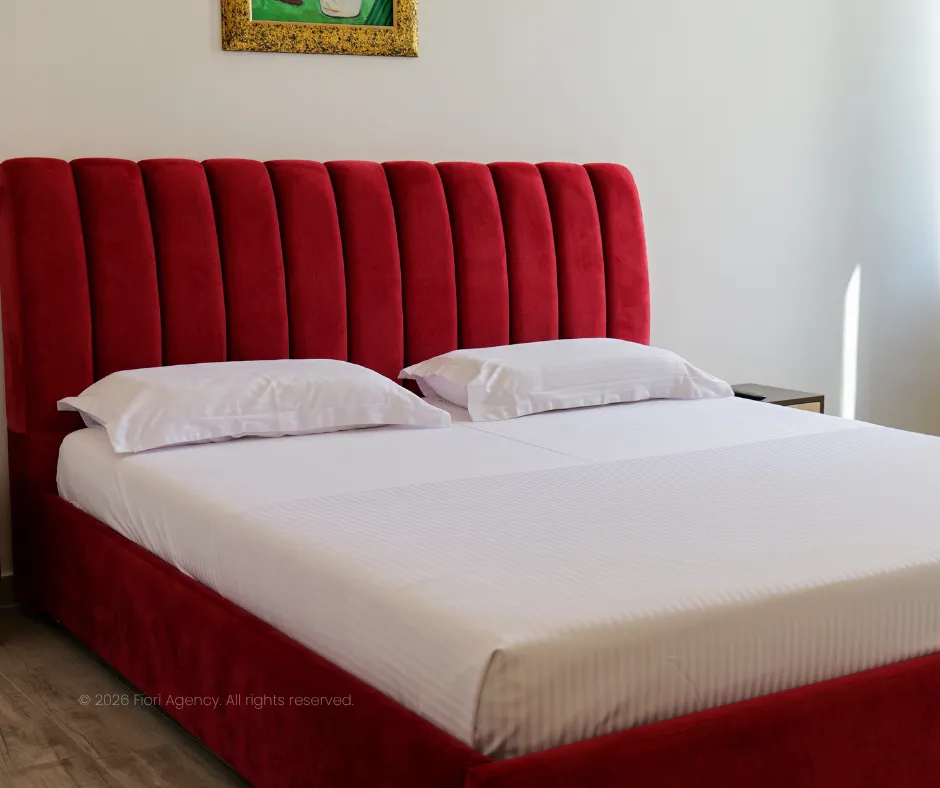
Photography is one of the most influential elements of a hotel listing. The images should make the property appealing while accurately representing what guests will find when they arrive.
Good hotel photos for Booking.com should include:
the exterior and entrance,
reception and common areas,
every individual room category,
bathrooms,
breakfast or restaurant areas,
pool, spa or leisure facilities,
balconies, terraces and views,
parking or access points when relevant.
Booking.com recommends showing rooms from several angles and including multiple photos for each room or unit, as well as bathroom images. Its photo-management tools allow properties to organise both property-level and room-level galleries and select a main image.
Avoid uploading the same images to every room category. A guest booking a family room should see the actual family room, not a general selection of the property’s most attractive spaces.
Professional photography should improve presentation through composition, lighting and editing—not by misrepresenting room size, views or facilities.
Choose the Main Photo Carefully
The main image is often the first element travellers see in search results. It should immediately communicate the type and quality of the property.
Depending on the hotel, the strongest main photo might show:
a distinctive exterior,
an attractive room,
a panoramic view,
a swimming pool,
a unique architectural feature.
The image should remain clear when displayed as a small thumbnail. Avoid dark photos, complicated collages, text overlays or images that do not explain what the property offers.
Changing the main photo can be tested over time, but results should be evaluated using impressions, page views and bookings rather than personal preference alone.
Keep Rates and Availability Open
Even an excellent listing cannot generate reservations if the hotel is unavailable during the dates travellers are searching.
To increase OTA bookings, hotels should load availability far enough in advance and regularly review upcoming dates. This is particularly important for weekends, holidays, events and high-demand seasons.
Check that:
rooms have been opened for future sale,
rates are assigned to every available room,
occupancy settings are correct,
minimum-stay restrictions are intentional,
closed dates have not been left blocked accidentally,
room inventory is synchronized across channels.
Availability should reflect the hotel’s actual capacity. Opening too little inventory can limit booking opportunities, while inaccurate inventory can cause overbooking.
Review Booking and Cancellation Policies
Guests should understand exactly what they are booking.
Every rate plan must clearly indicate whether it is refundable, whether prepayment is required, what happens in case of a no-show and which taxes or charges are included.
The hotel should review:
flexible cancellation deadlines,
non-refundable rates,
prepayment conditions,
child and extra-bed policies,
pet policies,
damage deposits,
check-in requirements,
additional local taxes.
Complicated or contradictory policies may cause travellers to abandon the booking process. At the same time, excessively flexible conditions may increase cancellations.
The right policy depends on demand, seasonality, lead time and the hotel’s commercial objectives.
Use Promotions Selectively
Discounts can improve short-term visibility or help fill low-demand dates, but they should not replace a clear pricing strategy.
Before activating a promotion, calculate the final amount the hotel will receive after both the discount and the OTA commission.
A promotion should address a specific need, such as:
increasing weekday occupancy,
attracting early bookings,
selling remaining rooms close to arrival,
encouraging longer stays,
entering a new international market.
Activating every available discount at the same time can reduce profitability and make the hotel’s normal rate appear less credible.
Manage Guest Reviews Professionally
Reviews influence how potential guests interpret the listing. They also reveal whether the property description matches the actual experience.
Respond to reviews in a professional and personalised way. Thank guests for positive feedback and address negative comments without becoming defensive.
Repeated complaints should be treated as operational information. If several guests mention unclear directions, poor soundproofing or incorrect room photos, the solution may require changes to both the property experience and the listing.
Review management is therefore part of Booking.com listing optimization, not a separate activity.
Improve Booking.com Ranking Without Making False Promises
Many hotels want to improve Booking.com ranking, but there is no single change that guarantees a higher position.
A more realistic approach is to improve all the elements that support discoverability and conversion:
accurate availability,
competitive and sustainable rates,
complete property information,
professional photos,
clear room categories,
transparent policies,
strong guest experiences,
consistent review management.
Booking.com provides tools for managing content, photos, reviews, reservations and performance data, showing that listing quality requires continuous management across several areas.
The goal should be to create a listing that is easier to find, understand and book—not to chase short-term ranking changes without a broader strategy.
Maintain Consistency Across Other OTAs
The same optimization principles apply to Expedia, Agoda and other booking platforms.
When you optimize hotel listing content across multiple channels, ensure that room names, occupancy, amenities, policies and photos remain consistent.
However, the listings do not need to be identical. Each platform may organise information differently or attract travellers from different markets. Content should be adapted to the platform while preserving the same facts.
A central record containing approved room names, descriptions, amenities and policies can help the team avoid contradictory updates.
How Often Should a Hotel Listing Be Reviewed?
Some information should be monitored daily, while a complete content review can be scheduled monthly or seasonally.
Review the listing whenever the hotel:
renovates rooms or common areas,
introduces a new service,
changes breakfast or parking conditions,
updates its cancellation policies,
creates a new room category,
commissions new photography,
changes seasonal facilities,
notices repeated guest questions.
The listing should evolve with the property. An outdated profile can continue generating incorrect expectations long after the hotel itself has changed.
Who Should Manage Hotel OTA Optimization?
Responsibility may belong to the owner, reservations manager, revenue manager or an external specialist. The important point is that one person or team must oversee the accuracy of the complete profile.
Content, rates and operational information are connected. A change made by one department should therefore be communicated to everyone managing the hotel’s sales channels.
Fiori Agency supports hotels and hospitality businesses with OTA content, professional photography, digital visibility and strategies designed to turn online interest into bookings.
Frequently Asked Questions
What should a hotel optimize first on Booking.com?
Start with availability, room information, amenities and photos. These elements directly affect whether travellers can find the right room and understand what they are booking.
How many photos should a hotel listing have?
There is no single number suitable for every hotel. The listing should contain enough high-quality images to represent every room category, bathroom, common area and important facility without unnecessary repetition.
Should every room category have separate photos?
Yes. Guests should be able to see the room they are considering. Using only general property photos can create confusion and unrealistic expectations.
Can better photos increase hotel bookings?
Professional, accurate images can make a listing more appealing and help travellers understand the property. However, photos should work together with competitive rates, availability, reviews and complete information.
How often should OTA information be updated?
Rates, availability and reservations require frequent monitoring. Property content should be reviewed whenever services change and through scheduled monthly or seasonal audits.
Should content be the same on every OTA?
The facts should remain consistent, but the presentation may be adapted to the structure and audience of each platform.
Conclusion
Effective hotel OTA optimization combines accurate information, clear room categories, professional photography, complete amenities, suitable rates and reliable availability.
The process does not end when the listing is published. Hotels need to review their profiles regularly, respond to guest feedback and update content whenever the property or its services change.
A well-managed listing helps travellers make confident decisions. For the hotel, this can mean better-qualified bookings, fewer misunderstandings and a stronger presence across Booking.com and other OTA platforms.